
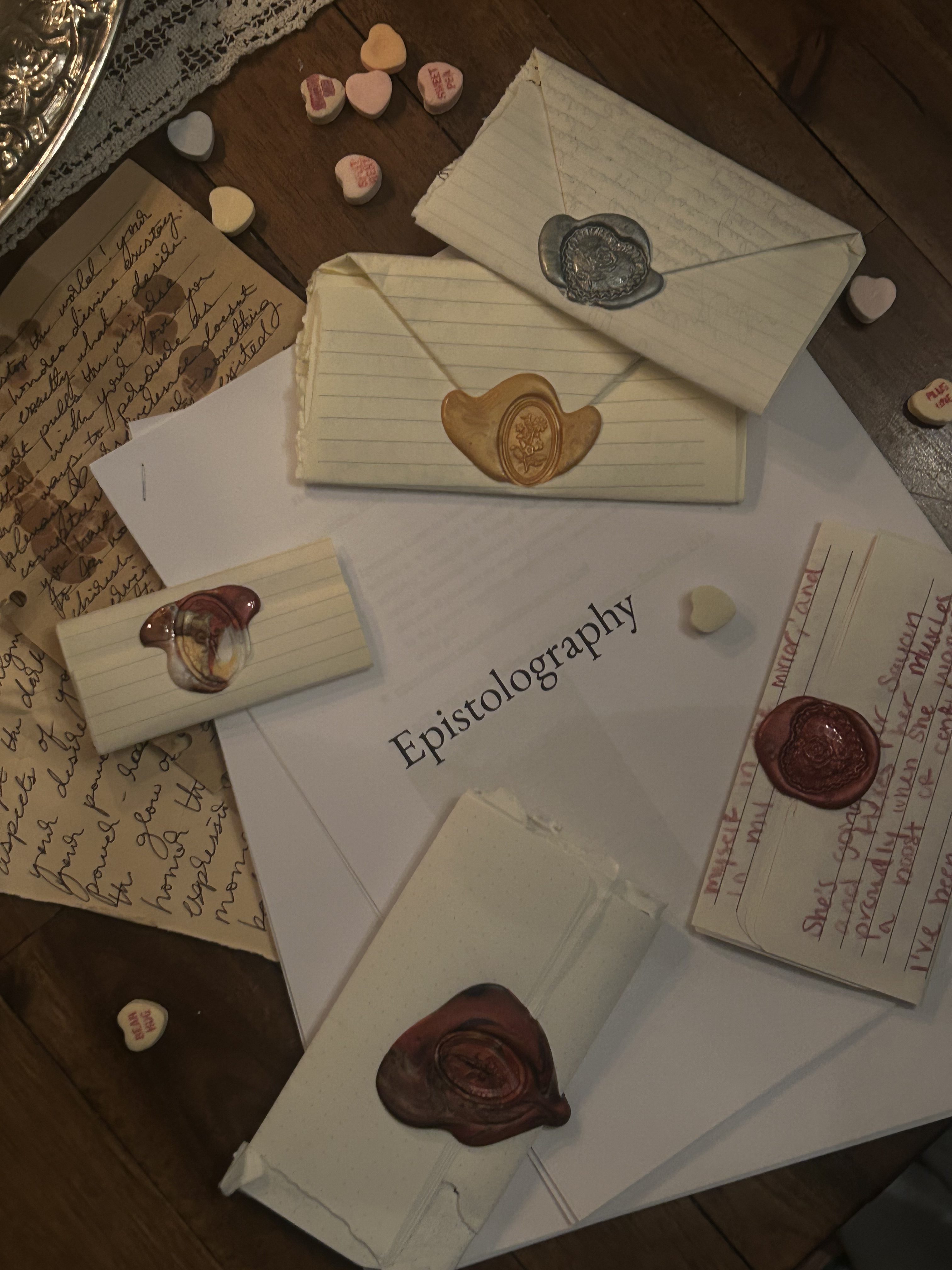
Dearest Audience,
I offer this example today as encouragement to uphold consistent letter-writing practice in our digital world. Just a few weeks ago, I hosted a writer workshop illuminating Epistolography. The tremendous results reflected my urgency to promote letter writing to all. Allow me to share with you the content we covered during this workshop. We began in the Hellenistic and Roman Periods / “Golden Age” of Latin literature. During this era, letter writing inhibited conversations of philosophy. A prime example is Epicurus’s Letter to Menoeceus, a foundational text of Epicurean philosophy. Written as a letter to a student, summarizing the ethical system focused on achieving a tranquil life through pleasure, defined as the absence of pain and mental disturbance (ataraxia). It advises on managing desires, understanding that not all pleasures are worth pursuing, and that a simple life with friends leads to the greatest happiness, emphasizing reason and moderation over fear of death or the gods. Essentially speaking, the lightest feather holds the heaviest hand; as in letter writing became the preferred educational correspondence.
Moving into the Byzantine Era (4th–15th Centuries), complex diplomacy infused Epistolary content with Chrysobulls (Golden Bulls): Imperial documents, often gilded, that served as formal, binding decrees, letters of recommendation, and military communications. It became a crucial tool for a functioning society, thus inspiring middle-low brow communities to partake. Surging everyday letter writing was noted as Private Papyri. Inherited by the Romans, the dromos (a state-run pony express system) delivered mail for officials and civilians. Let us envision the romance of a mail horse delivering a limerence-dripped private papryri letter, and hold onto that vision as we enter the Medieval period (c. 500–1500 CE) & the Renaissance (c. 1350–1600 CE).
After epistolary had transcended from philosophical — governmental — and personal, there was an amassing craving for structure. Too many letters lost, and too many mistranslated conflicts. Thus birthing Ars Dictaminis.
The Five-Part Structure (Ars Dictaminis): Developed in the 11th century:
- Salutatio: The greeting, which was highly hierarchical.
- Captatio Benevolentiae: The securing of goodwill.
- Narratio: The statement of the case or purpose.
- Petitio: The request.
- Conclusio: The conclusion.
Most of our letter-writing today pays homage to the five-part structure. Yet restrictions ultimately beg to be broken. As we enter the Age of
Enlightenment Period (1650 – 1750), we witness epistolography become novelistic. After centuries of collecting infamous material, inspired by realistic plot and narrative, writers started a new format for novelism altogether. Some noteworthy examples include: Aphra Behn’s Love-Letters Between a Nobleman and His Sister, Samuel Richardson’s Pamela, Virtue Rewarded(1740) and Clarissa (1748), Choderlos de Laclos’ Les Liaisons Dangereuses (1782), and Jean-Jacques Rousseau’s Julie, ou la nouvelle Héloïse (1761). Epistolary art captures the spirit of the human connection. The modernist period in the twentieth century blossomed non-structured letter correspondence, via pen-pal, emails, sticky notes, diary entries, and texting, which opens the door for immediate communication accessible at anytime. Technology, the blessing and curse of urgency. Longing is lost without analog conversing, or new translations are formed, such as ghosting. We lose anticipation, patience, and contextual awareness as we are handed everything at any moment. Beguiling for emergencies, but dangerous for literary vitality. Hope has not fallen, as Epistolography continues to metamorphose beyond centuries. Including on the night of 2.15.26, when I gathered a group to engage with letterwriting. Thirty minutes — One letter from the perspective of a past version of yourself — Thirty minutes — A letter responding to that self. The results released much stored emotions amongst the group. As a matter of chance, communication transforms a person, even if the addressed is one’s very own self.
Best Regards,
K.W
Leave a Reply